
Hoop
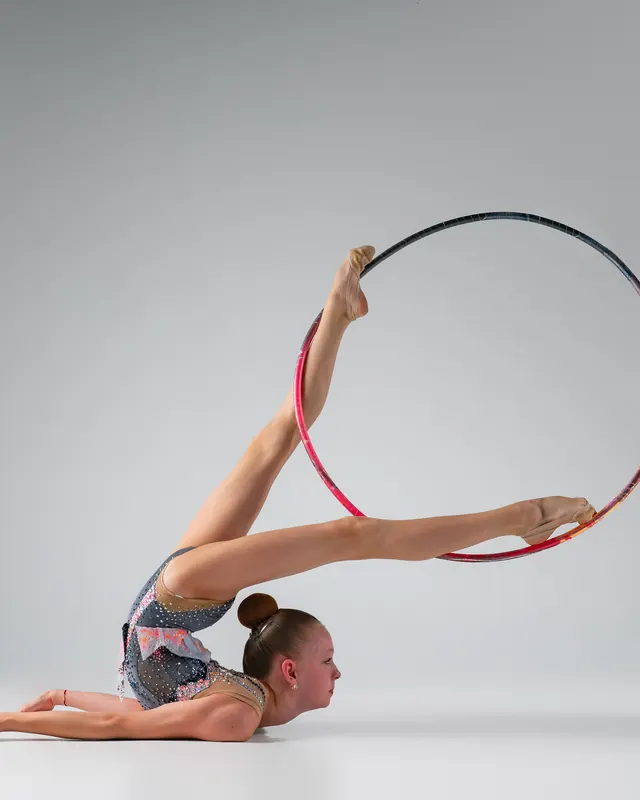
Rolls over the body and floor, rotations and high throws — gymnasts even pass through the hoop.
▶ Taisiia Onofriichuk (UKR), hoop — gold, World Championships 2026
Rhythmic gymnastics is an Olympic sport where a gymnast performs a routine to music with a hoop, ball, clubs, ribbon or rope. It combines the flexibility of gymnastics, the grace of ballet and the skill of handling an apparatus — every throw, catch and turn is set to the music.
The official Olympic explainer: what gymnasts do and how a routine works.
Each apparatus asks for different skills. Tap a video to see the gold-medal routines of the 2026 World Championships in Frankfurt.
Rolls over the body and floor, rotations and high throws — gymnasts even pass through the hoop.
▶ Taisiia Onofriichuk (UKR), hoop — gold, World Championships 2026
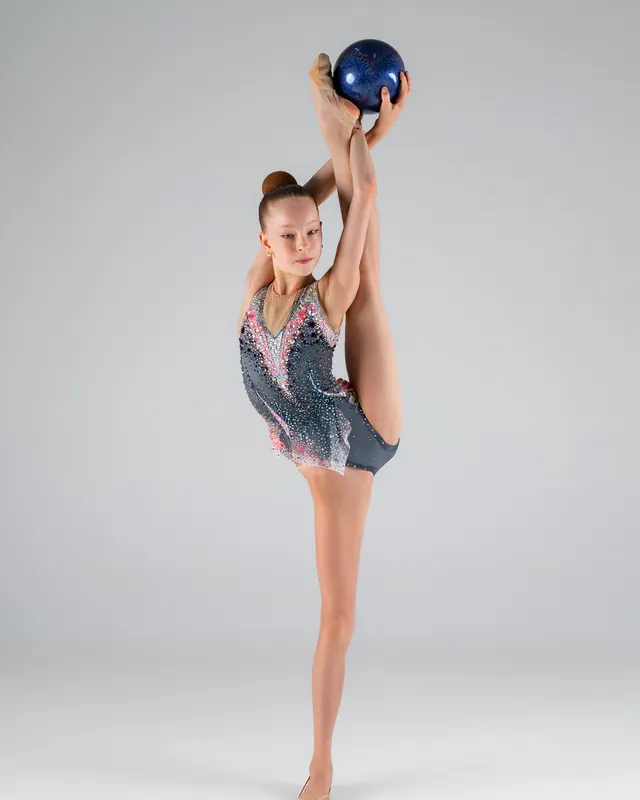
Soft, flowing movements: rolls along the arms and back, bounces and throws — the ball must never be gripped.
▶ Darja Varfolomeev (GER), ball — gold, World Championships 2026
Two clubs at once: fast mills, asymmetric movements and throws — the hardest test of coordination.
▶ Stiliana Nikolova (BUL), clubs — gold, World Championships 2026
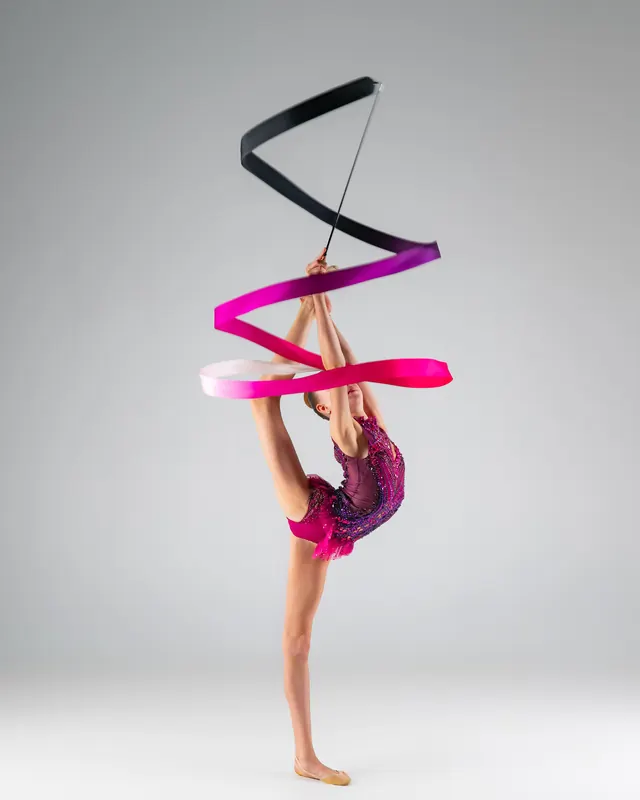
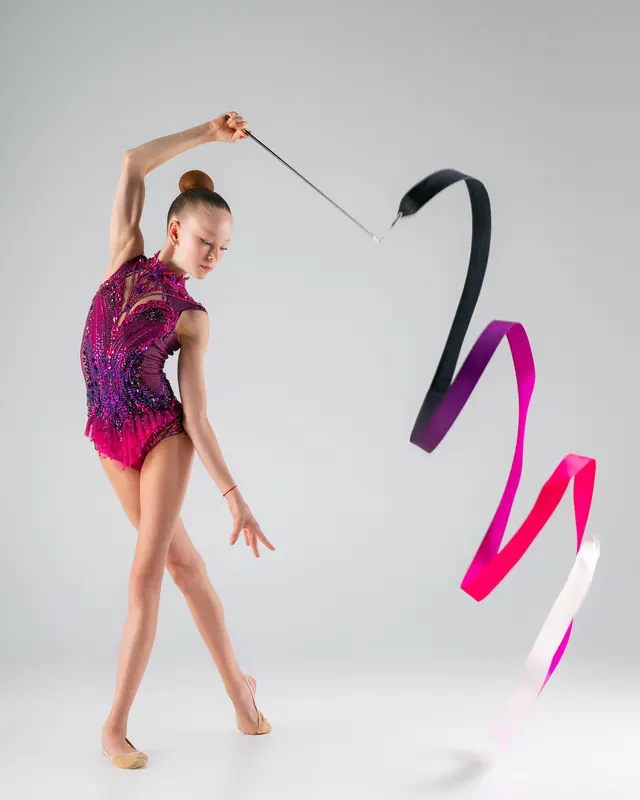
Six metres of satin drawing spirals and snakes in the air — the ribbon must never stop moving.
▶ Darja Varfolomeev (GER), ribbon — gold, World Championships 2026
Jumps and skips through the rope, swings and throws. Today it is used for juniors and in national competitions.
▶ Lily Ramonatxo, rope — Junior World Championships 2019
Three panels of judges watch every routine, and the final score is the sum of three parts:
How hard the routine is: body elements — jumps, balances and rotations — plus difficult work with the apparatus. The more a gymnast can do cleanly, the higher the score.
How well the routine tells a story with the music: character, expression, rhythm and the connection between movement and music. Starts at 10 points; mistakes are deducted.
How clean the technique is: posture, precision, no drops or lost balance. Also starts at 10 points; every error costs tenths.
D + A + E = final score
Gymnasts compete individually with one apparatus at a time, or in a group of five, where they exchange apparatus in the air and move as one. Group routines are among the most spectacular moments of the Olympic Games.
▶ Team Spain, group routine
The International Gymnastics Federation (FIG) recognises rhythmic gymnastics as its own discipline.
Olympic debut in Los Angeles. Canada's Lori Fung becomes the first Olympic champion — by 0.050 points.
The group event joins the Olympic programme in Atlanta.
Alina Kabaeva's ribbon in Athens — one of the most famous routines in the sport.
Yevgeniya Kanaeva becomes the only gymnast to win the Olympic all-around twice (2008 and 2012).
Margarita Mamun wins gold in Rio. Years later she gave a master class to GYMNASTIKA gymnasts.
FIG judge Anastasiya Zakreuskaya founds GYMNASTIKA RG Club in Dubai.
The 1st UAE International GYMNASTIKA CUP: delegations from 20 countries in Dubai and master classes with Olympians.
Tokyo 2020 Olympic medallists Alina Harnasko and Anastasiia Salos come to the GYMNASTIKA CUP in Dubai.
Paris 2024: Darja Varfolomeev wins the individual all-around title.
Over 700 gymnasts from around the world compete at the 3rd GYMNASTIKA SOLO CUP in Dubai.
The 5th-anniversary SOLO CUP: 750 gymnasts from 25 countries, with Olympic medallist Liubou Charkashyna as head judge.
The UAE becomes a member of World Gymnastics (FIG) at the 86th Congress in Bangkok — Emirati gymnasts can now compete at official international events.


Then and now
A strong, mobile body built gradually and safely, from the very first class.
Gymnasts are easy to recognise by how they stand and move — for life.
Working with an apparatus trains the hands, eyes and both sides of the body together.
Every routine is a dance to music — children learn rhythm and expression.
Regular training, goals and performing in front of an audience build character.
Groups, shows and tournaments — gymnastics is a community.
At the Olympic Games rhythmic gymnastics is a women's sport. At GYMNASTIKA our groups are for girls; Mum + Baby classes (2–5 years) are open to boys and girls.
Most girls start between 3 and 6. At GYMNASTIKA children can begin at 2 with Mum + Baby and join Beginners groups from 3. Older beginners are welcome too — there are groups for every level, and adult classes from 18.
No. Many gymnasts train for health, flexibility and joy. Those who want to compete move into pre-competitive and competitive groups when they are ready.
Artistic gymnastics is performed on apparatus such as the beam, bars and vault. Rhythmic gymnastics is performed on the floor, to music, with a hand apparatus — hoop, ball, clubs, ribbon or rope.
Yes, when training is age-appropriate. Our coaches build flexibility and strength step by step, and every group is matched to the child's age and level.
Comfortable sportswear and a water bottle. Our team will advise on a leotard and half-shoes later.