Food is energy for training and for growing
A child who trains spends energy twice: on the class itself and on growing. If there is not enough food, the body saves energy where it can — and children feel it as tiredness, poor concentration, low mood and slower progress in the gym.
That is why at GYMNASTIKA we talk about food as fuel and strength, never as something to limit. No calorie counting, no "forbidden" foods, no weighing.
Three simple rules
- Regular. Three main meals and one or two snacks a day. Skipping breakfast or lunch before an evening class is the most common reason girls feel weak in training.
- Varied. Different colours on the plate across the week: vegetables and fruit, grains, protein foods, dairy. Variety gives the body everything it needs without any tables or calculations.
- Enough. A growing gymnast needs to eat until she is full. Let her appetite guide the portion — on training days it is normal to be hungrier.
What a balanced plate looks like
You do not need to weigh or count anything. For lunch and dinner, simply imagine the plate divided like this — and add some dairy during the day.
A balanced plate — an easy picture to remember
- ½ Vegetables and fruitcucumber, tomato, carrot, broccoli, apple, berries
- ¼ Grainsrice, pasta, bread, potatoes, oats
- ¼ Protein foodschicken, fish, eggs, beans, lentils, meat
- + Dairymilk, yoghurt, laban, cheese
- Carbohydrates (grains, fruit) are the main fuel for training.
- Protein helps muscles recover and grow.
- Calcium (dairy) and vitamin D support strong bones — especially important in a sport with jumps and landings.
- Healthy fats (nuts, olive oil, avocado, fish) are needed for energy and growth too.
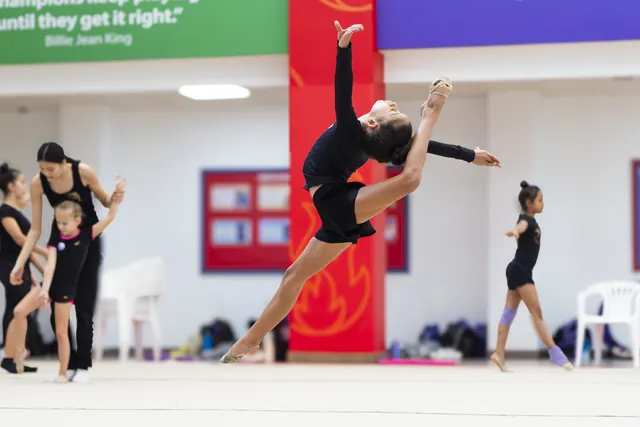
Before training
The ideal is a normal meal 2–3 hours before class. If your daughter goes straight from school to the gym, a light snack 30–60 minutes before training helps a lot:
- Banana or other fruitquick energy, easy on the stomach
- Yoghurt or milka little protein and calcium
- Small sandwichor a few crackers
- Dates and nutsa handful — if there are no allergies
Avoid a very heavy or very fatty meal right before class: jumps and rotations on a full stomach are uncomfortable.
After training
Within about an hour or two after class, the body needs food to recover: a combination of carbohydrates and protein. A normal family dinner is perfect. If dinner is late, give a snack on the way home.
- Family dinnerpasta, rice or potatoes with chicken, fish or meat and vegetables
- Snack on the way homeif dinner is late: a sandwich and a glass of milk
- Yoghurt and fruita light option after a short class
A training day: an example
This is how regular meals can fit around school and an evening class:
An example of a training day with an evening class
- BreakfastPorridge with fruit and milk — or eggs, toast and a fruit
- School snackFruit, yoghurt or a small sandwich
- LunchRice or pasta, chicken or fish, vegetables
- Before trainingA banana and a glass of laban — or a small sandwich
- TrainingHer own water bottle, a few sips in every break
- DinnerA normal family meal: protein, grains and vegetables
Water in the UAE heat
In our climate children lose fluid quickly, even in an air-conditioned gym. Every gymnast should come to class with her own water bottle.
- Drink during the day, not only at training.
- Sip water during breaks in class.
- For a normal training session plain water is enough.
- Energy drinks are not suitable for children; sweet sodas are better saved for occasions.
A simple check: if a child often has a headache, feels dizzy or her urine is dark, she is probably not drinking enough.
Competition day
- Nothing new. A familiar breakfast that she usually eats and likes.
- Competitions can be long: pack snacks and water in the bag — fruit, sandwiches, crackers, yoghurt.
- If she is too nervous to eat much, offer small portions more often.
- After the performance — a proper meal, whatever the result.
A lunchbox for a training day
- Wholegrain sandwichwith chicken, egg or cheese and vegetables
- Vegetable stickswith hummus
- Fruit or berrieswhatever she likes
- Yoghurt or laban
- Water bottlealways in the bag
How to talk about food
Children copy what adults say. Talk about what food gives: "you'll have energy for your jumps", "this helps your muscles". Avoid comments about weight and body shape — from parents, relatives and friends. A girl in rhythmic gymnastics should know that her body is strong, not that it should be smaller.
Talk to a paediatrician if your daughter often feels tired or dizzy, skips meals, gets injured often, worries about her weight or eats very little. Tell her coach too — together we will find the right load.
In short
- Three meals and one or two snacks every day.
- Variety instead of restrictions.
- A snack before class and food after it.
- Water — always with her.
- No diets and no talk about weight.
This article gives general information for parents and is not medical advice. If you are worried about your child's health, eating or energy levels, please talk to your paediatrician.
Sources
Come to a trial class
See how your daughter feels in rhythmic gymnastics. A trial class costs AED 50.